Written and edited by the LibraryFit editorial team. Last updated June 2026.
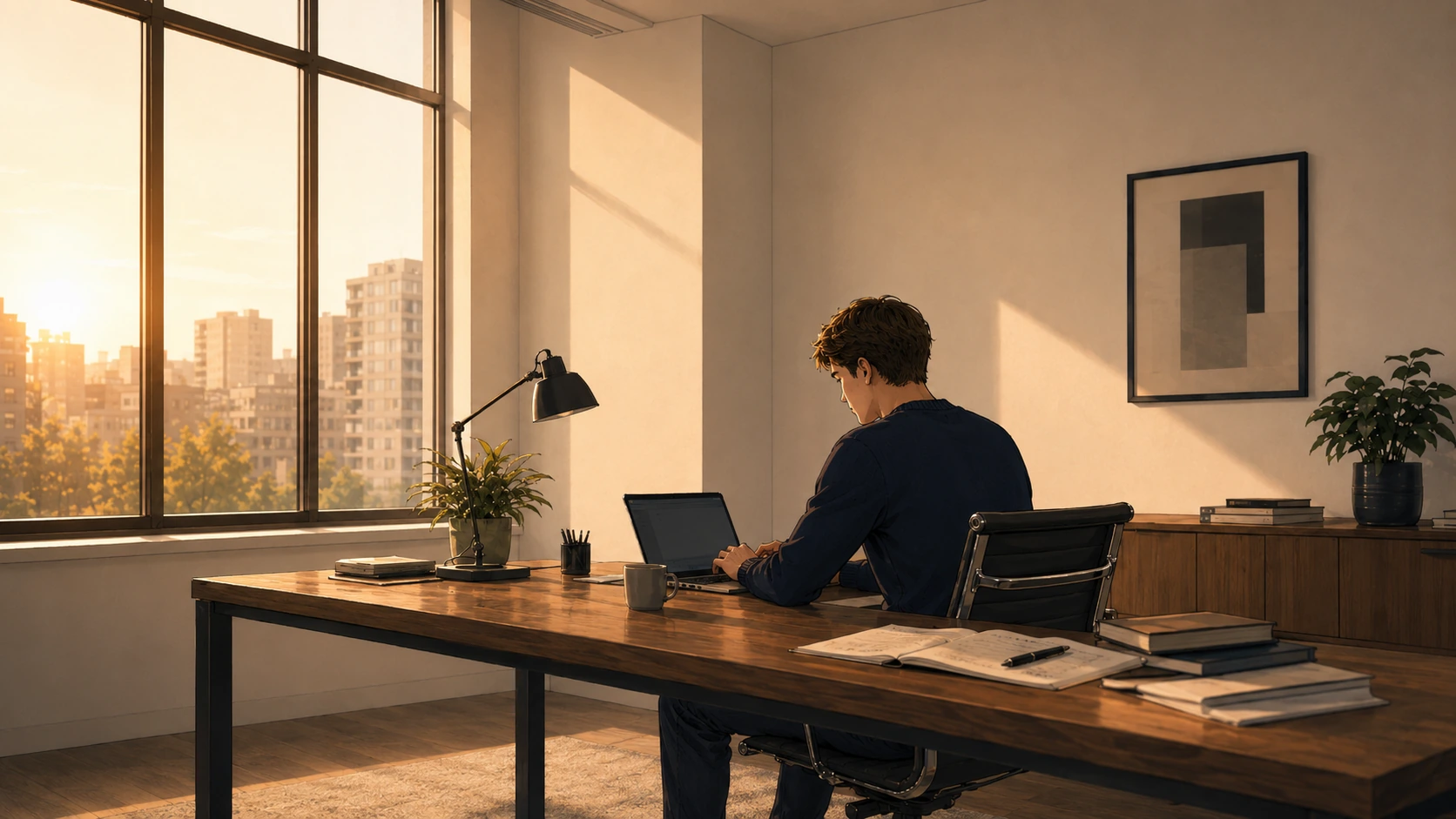
There are meetings you cannot leave. Deadlines that pin you to your chair. Commutes that give you no choice. These are not failures of discipline — they are the geometry of a working day. And somewhere inside them, the standard advice quietly stops making sense. Stand up every hour. Take a walk. Step away from your screen. All reasonable. All impossible, right now, in this moment.
So the question shifts. Not can you stand up — but what can you do while you are still sitting?
It turns out the answer is not nothing.
Why the usual advice doesn’t help when you can’t get up
Most movement advice is built around interrupting sitting — getting up, walking, stepping away. That advice is sound, and there is good research behind it. But it rests on an assumption that is not always true: that you have the option to leave.
This article is not about replacing that advice. It is about the gap it leaves — the hours when leaving is not available, and the question becomes what is actually possible from the chair itself.
The distinction matters. Moving to interrupt sitting and moving while sitting are two different things. One pauses the problem. The other works inside it. Both have a place in a desk-heavy day. This article is about the second one.
Your body has a system for this — and you’ve been using it without knowing
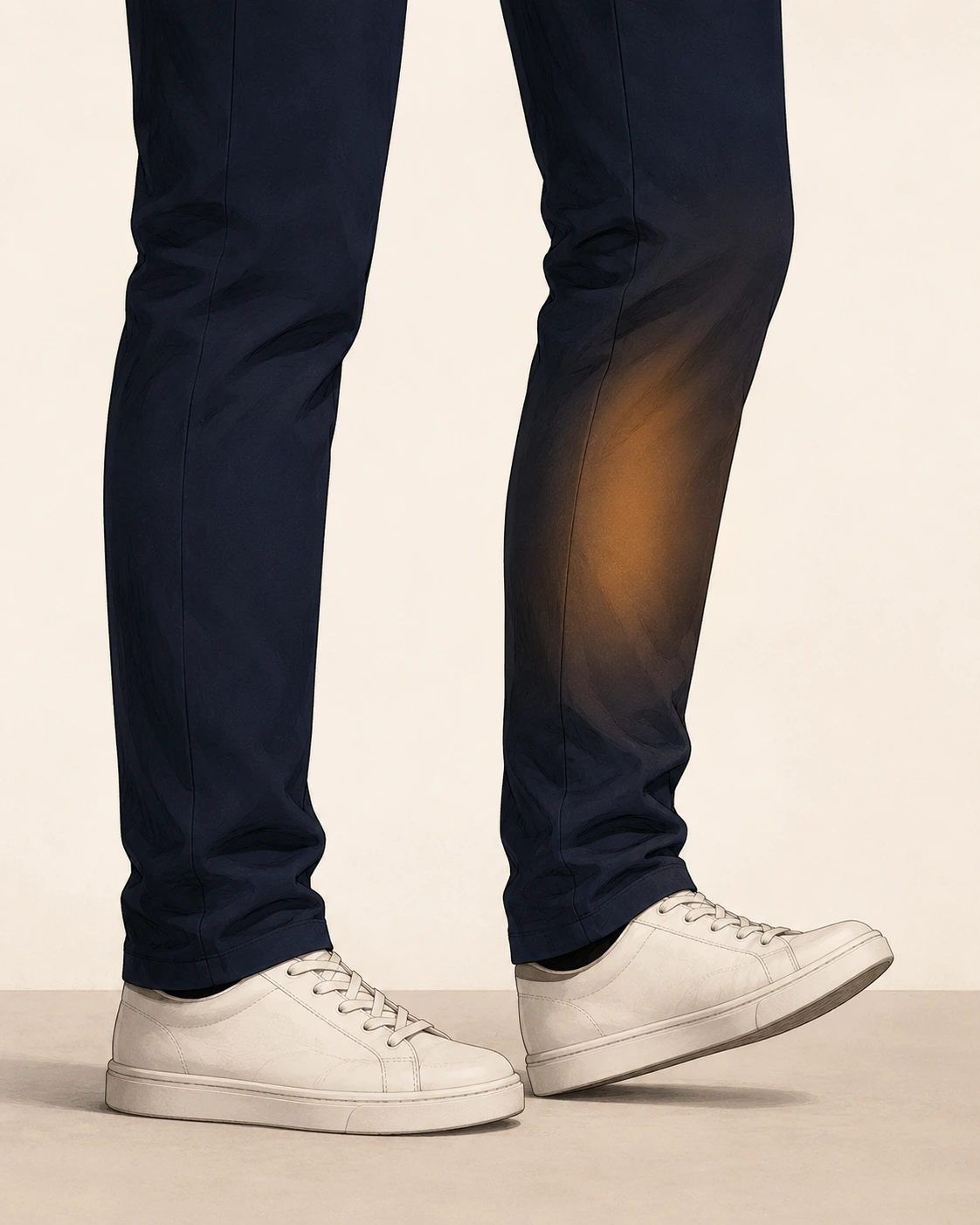
There is a term in exercise physiology for the energy your body spends on everything that is not sleeping, eating, or intentional sport: non-exercise activity thermogenesis, or NEAT. It includes typing, fidgeting, shifting in a seat, tapping a foot, and adjusting a posture. Levine’s foundational research on NEAT found that it accounts for a surprisingly large and variable share of daily energy expenditure — as much as 50% in highly active individuals, and as little as 15% in very sedentary ones.
What this means in practical terms is that small movements accumulate. They are not trivial. They are a real, measurable part of how the body manages energy across a day.
Now consider something you may have been told to stop doing. Leg shaking. The restless foot. The rhythmic bounce under the desk that someone once called a nervous habit. For a long time, it was treated as a sign of anxiety or poor focus. The science suggests a different reading.
That movement was your body doing, without instruction, exactly what it is built to do.
What research found when they actually measured leg movement while sitting
A randomized crossover study by Bao and colleagues (2024) measured what happens physiologically when people shake their legs in a seated position. Fifteen participants alternated between sitting still and habitual leg shaking while their energy expenditure, muscle activation, and cardiovascular responses were tracked in detail.
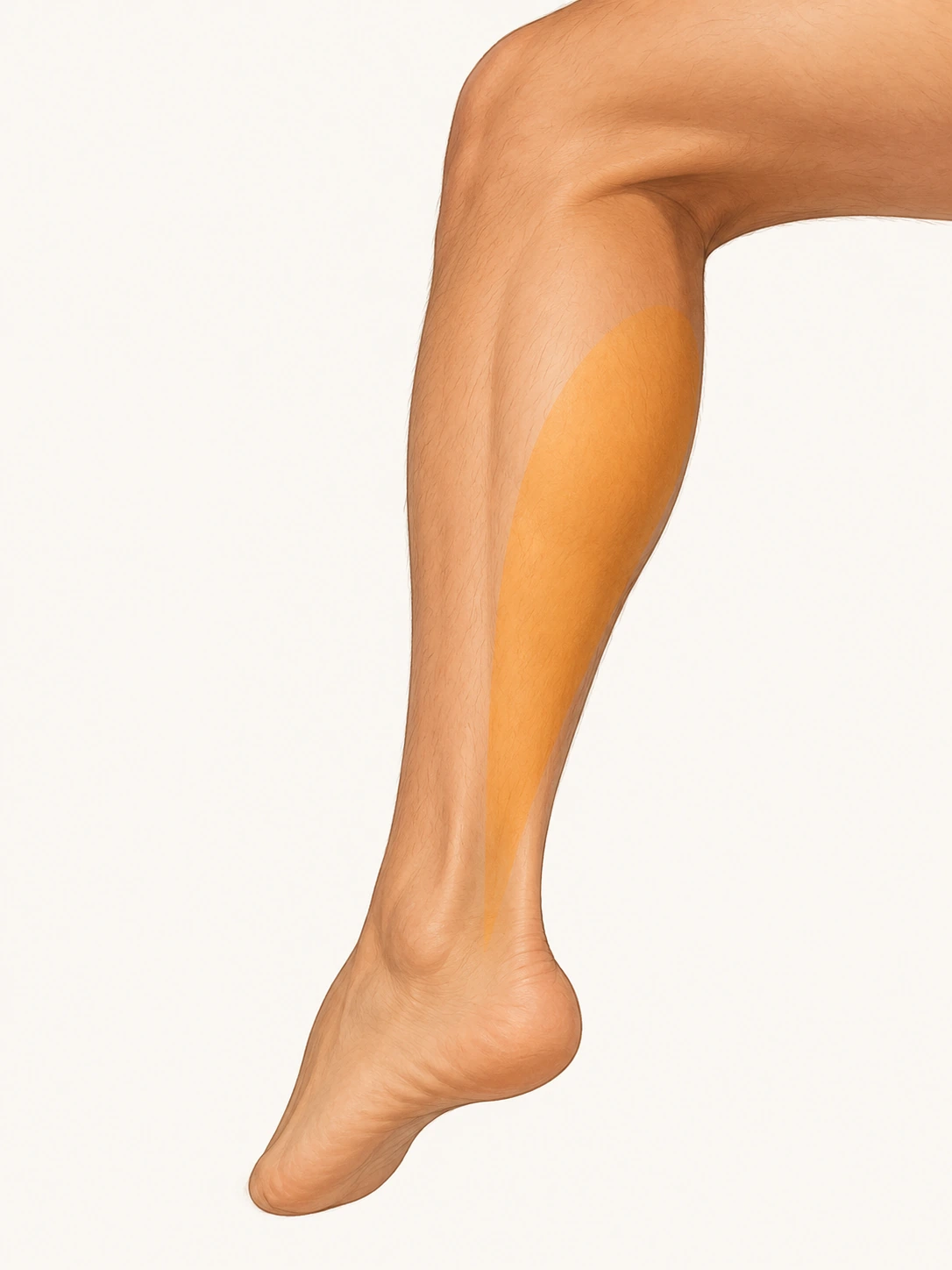
Leg shaking raised energy expenditure by approximately 16% compared to sitting still. The primary muscles activated were the soleus and gastrocnemius — the large muscles of the lower leg. Heart rate and blood pressure showed no meaningful change. The muscles themselves showed no signs of increasing fatigue across the session. The researchers concluded that it offers a simple, feasible way to increase physical activity without disrupting daily routines.
A separate line of research by Hamilton and colleagues (2022) examined a related movement — an isolated seated plantarflexion that targets the soleus specifically. What they found about this muscle is worth pausing on.
The soleus is roughly 1% of your body weight. It is made up of approximately 88% slow-oxidative muscle fibres — the type built for sustained, low-fatigue activity over long periods. Hamilton’s research found that when this muscle is activated while sitting, it can sustain a locally elevated metabolic rate for hours without fatigue, even in people with low fitness levels.
Try this now, as you read: place your feet flat on the floor, and slowly raise the front of one foot while keeping the heel down. Lower it. Repeat, unhurried. That is the muscle. That is what the research was measuring.
The body responds. It was always going to respond. The question was only whether anyone was paying attention.
Why sitting still is harder on the body than sitting with small movements
A common assumption is that the difference between sitting and standing is the key variable. The research suggests the more important variable is whether the muscles are doing anything at all.
Hamilton’s work highlights something that tends to get overlooked: inactive muscle fibres require very little energy. Despite being the body’s largest lean tissue mass, resting skeletal muscle accounts for only around 15% of the body’s glucose oxidation during quiet sitting. The muscle is present, but effectively offline.
Static standing, as Hamilton and colleagues note in a 2025 review, does not activate the soleus to a meaningfully greater degree than sitting. The position changes; the muscle activation does not change much. What does change the activation is movement — specifically, the kind of rhythmic, low-effort movement the soleus is designed to sustain.
The difference between a completely still seated body and one with subtle leg movement is not dramatic in appearance. In the muscle, it is a different state entirely.
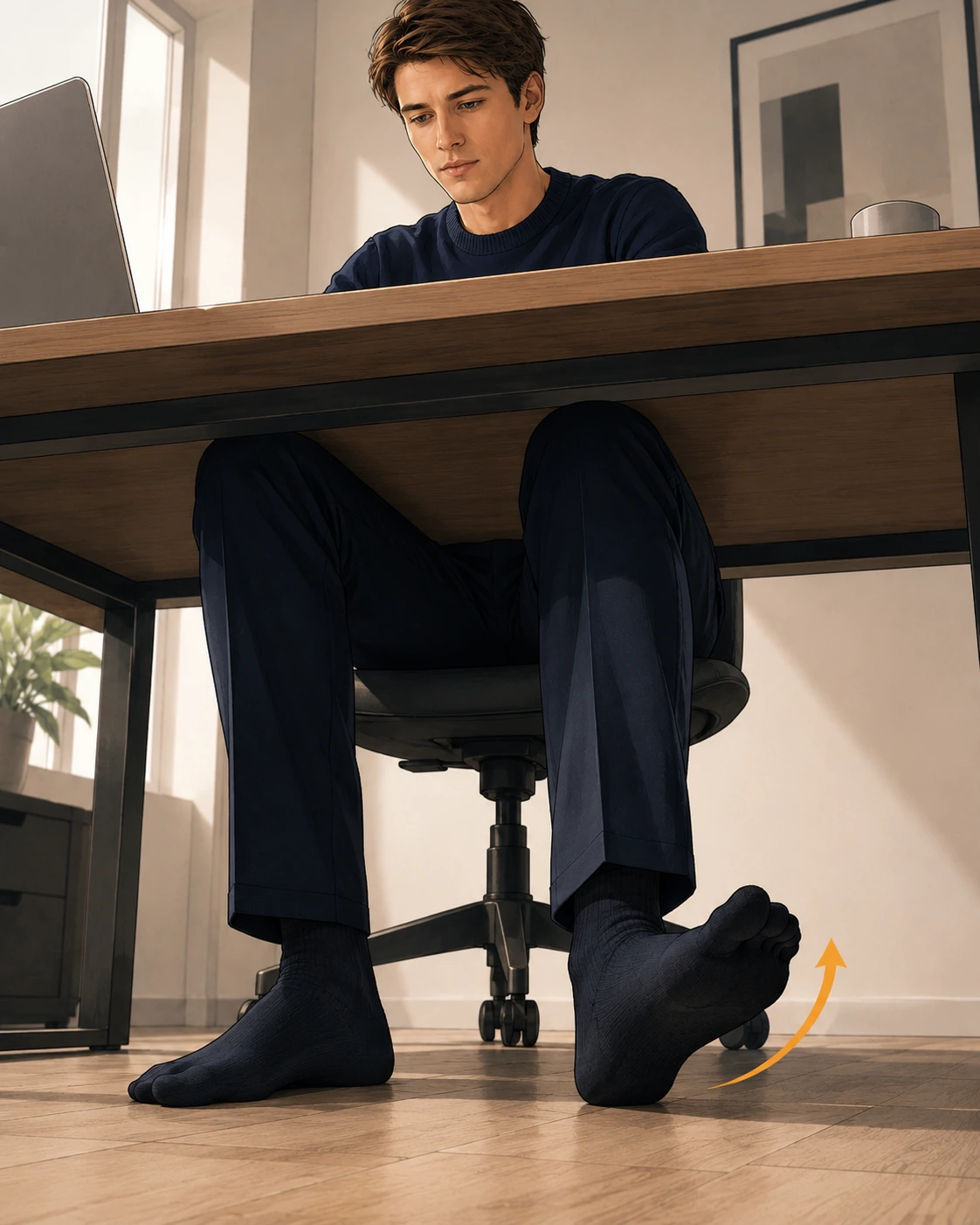
Three things you can do right now — without leaving your chair
These are not exercises. They do not require a break, a timer, or anyone’s permission. They work best when they become habitual rather than scheduled — something the body returns to on its own.
- Soleus push-up. Place both feet flat on the floor. Raise the front of one foot slowly while keeping the heel grounded. Lower it back. Repeat at a comfortable, unhurried pace. The movement is small. The muscle engagement is real. This is the movement studied directly by Hamilton’s research group, and it can be sustained for extended periods without fatigue.
- Intentional leg movement. The leg shaking you may have suppressed out of social habit — do it with awareness. A slow, rhythmic motion rather than a rapid one. Bao’s research found that this movement activates the same lower-leg muscles with no cardiovascular burden. The habit was never the problem. The self-consciousness around it was.
- Isometric hold with breath. Press your thighs gently downward against your seat, or engage your core lightly. Hold for five seconds while breathing out slowly. Release. This produces no visible movement at all — completely invisible in an open office or a meeting — and it reminds the body that it is still present and active.
These are signals. Not solutions, not substitutes — signals. Each one tells the body that it has not been forgotten, even when the schedule has not left room for anything more.
How often is enough?
Research on breaking up sedentary time consistently finds that lower frequency is more sustainable than higher frequency. In one workplace trial of resistance-exercise breaks (Rogers and colleagues, 2024), far more people found a low frequency of breaks acceptable than a high one — people are more likely to maintain a habit that asks little of them regularly than one that demands a lot occasionally.
There is no documented optimal number of seated micro-movements per day. What the evidence points toward is a simple principle: consistency over quantity. The goal is not to count repetitions. The goal is for the body to not go long stretches without any activation at all.
A practical approach: whenever you notice you have been completely still for a while, begin. No alarm required. No productivity app. The noticing itself is the trigger.
What this does not mean
It does not mean that seated movement replaces standing, walking, or intentional exercise. Those have distinct benefits that small leg movements cannot replicate. It does not mean that every health effect of physical activity can be accessed from a chair. And it does not mean the body is fine with extended stillness as long as one foot is moving.
What it means is this: in the moments when leaving is not an option, there is something real and supported by research that you can do. That is the extent of the claim — and it is enough.
Your body does not need permission to move. It needs opportunity. Seated movement is not a workaround — it is the option that exists when no other option does. The muscles involved are built for exactly this. Start with one movement. The one that is already in your hands, or your feet, right now.
Want a complete reset system for your desk day? Desk Athlete Reset brings together the movement breaks, posture resets, and daily routines from LibraryFit into one practical guide — built for people who sit for a living.
Frequently Asked Questions
Is leg shaking actually good for you?
A randomized crossover study found that habitual leg shaking while seated raised local energy expenditure and activated lower-leg muscles without any increase in heart rate or blood pressure. The evidence is preliminary — the study was small and conducted in a laboratory — but it supports the idea that the movement has measurable physiological value.
Does seated movement replace standing or walking breaks?
No. Standing, walking, and seated movement serve different purposes and produce different physiological effects. Seated movement is for the moments when standing is not available — not a substitute for the times when it is.
How many times a day should I do these movements?
There is no documented optimal number for these specific movements. The general principle from research on sedentary behavior is that regularity matters more than quantity. When you notice stillness, move. That is a workable starting point.
Can I do these movements in an open office without anyone noticing?
Yes — and this is one of their practical advantages. The soleus push-up and leg movement are below desk level and produce no visible upper body change. The isometric hold is entirely invisible. They are designed, in effect, for exactly this environment.
What to Read Next
- The 2-Minute Sitting Break: A Routine You’ll Actually Repeat — for when you can step away
- Why Your Back Hurts Even With a Good Chair
- 5 Quiet Movement Breaks You Can Do in Work Clothes
Sources
- Bao R, Hu Y, Xu R, Gao C, Guo Y, Zhu Y, Pan S, Wang W. (2024). The metabolic effects of habitual leg shaking: A randomized crossover trial. Journal of Diabetes, 16(5), e13556. doi:10.1111/1753-0407.13556
- Hamilton MT, Hamilton DG, & Zderic TW. (2022). A potent physiological method to magnify and sustain soleus oxidative metabolism improves glucose and lipid regulation. iScience, 25(9), 104869. doi:10.1016/j.isci.2022.104869
- Hamilton MT, & Zderic TW. (2025). Physiological processes induced by different types of physical activity that either oppose or enhance postprandial glucose tolerance. Frontiers in Endocrinology, 16, 1601474. doi:10.3389/fendo.2025.1601474
- Levine JA. (2004). Nonexercise activity thermogenesis (NEAT): environment and biology. American Journal of Physiology — Endocrinology and Metabolism, 286(5), E675–E685. doi:10.1152/ajpendo.00562.2003
- Rogers EM, Banks NF, Trachta ER, Barone Gibbs B, Carr LJ, Jenkins NDM. (2024). Acceptability of performing resistance exercise breaks in the workplace to break up prolonged sedentary time: A randomized control trial in U.S. office workers and students. Workplace Health & Safety, 72(6), 234–243. doi:10.1177/21650799231215814
FREE TOOLKIT
The Desk Athlete Toolkit
Six printable movement cards you can do right at your desk — no gym, no equipment. One card for every workday moment.
Get the free toolkit